
AMLD6 & Environmental Crime in the Supply Chain
AMLD6 expands the scope of money laundering predicate offences to include environmental crime. For compliance teams and risk officers, this means supply chain exposure is no longer just an ESG concern — it’s a regulatory one.
Business Radar is built to help you find it.
ISO 27001 certified • Fully GDPR Compliant • EU Data hosting
What AMLD6 Means for Your Compliance Team
The Sixth Anti-Money Laundering Directive (AMLD6) was transposed into EU law in 2021 and significantly expanded the list of predicate offences for money laundering. Environmental crime now sits alongside financial fraud, corruption, and organised crime as a source of illicit funds that financial institutions and regulated businesses must guard against.
This has direct implications for how compliance teams approach third-party risk, KYB processes, and supply chain due diligence. Companies that knowingly — or unknowingly — conduct business with entities involved in environmental crime face not just reputational damage but potential criminal liability.
Illegal Logging & Deforestation
Suppliers linked to unauthorised deforestation, illegal timber trade, or land grabbing generate proceeds that qualify as money laundering predicate offences under AMLD6. Business Radar surfaces news signals, enforcement actions, and regulatory findings connected to these activities.
Illegal Waste Disposal & Pollution
Unlicensed waste dumping, illegal discharge of hazardous substances, and deliberate pollution are criminalised under AMLD6. Compliance teams need to monitor whether counterparties are implicated in enforcement actions, fines, or criminal proceedings related to waste and environmental pollution.
Illegal Wildlife Trade & Biodiversity Crime
Wildlife trafficking is among the world’s most profitable criminal enterprises. Under AMLD6, proceeds from the illegal trade in protected species, habitats, and biodiversity resources constitute money laundering. Business Radar monitors supply chains for links to known trafficking networks.
How Business Radar Supports AMLD6 Compliance
Business Radar provides adverse media screening and monitoring specifically designed to surface environmental crime risk signals across your supplier and counterparty portfolio. Our platform covers the full scope of AMLD6 environmental predicate offences.
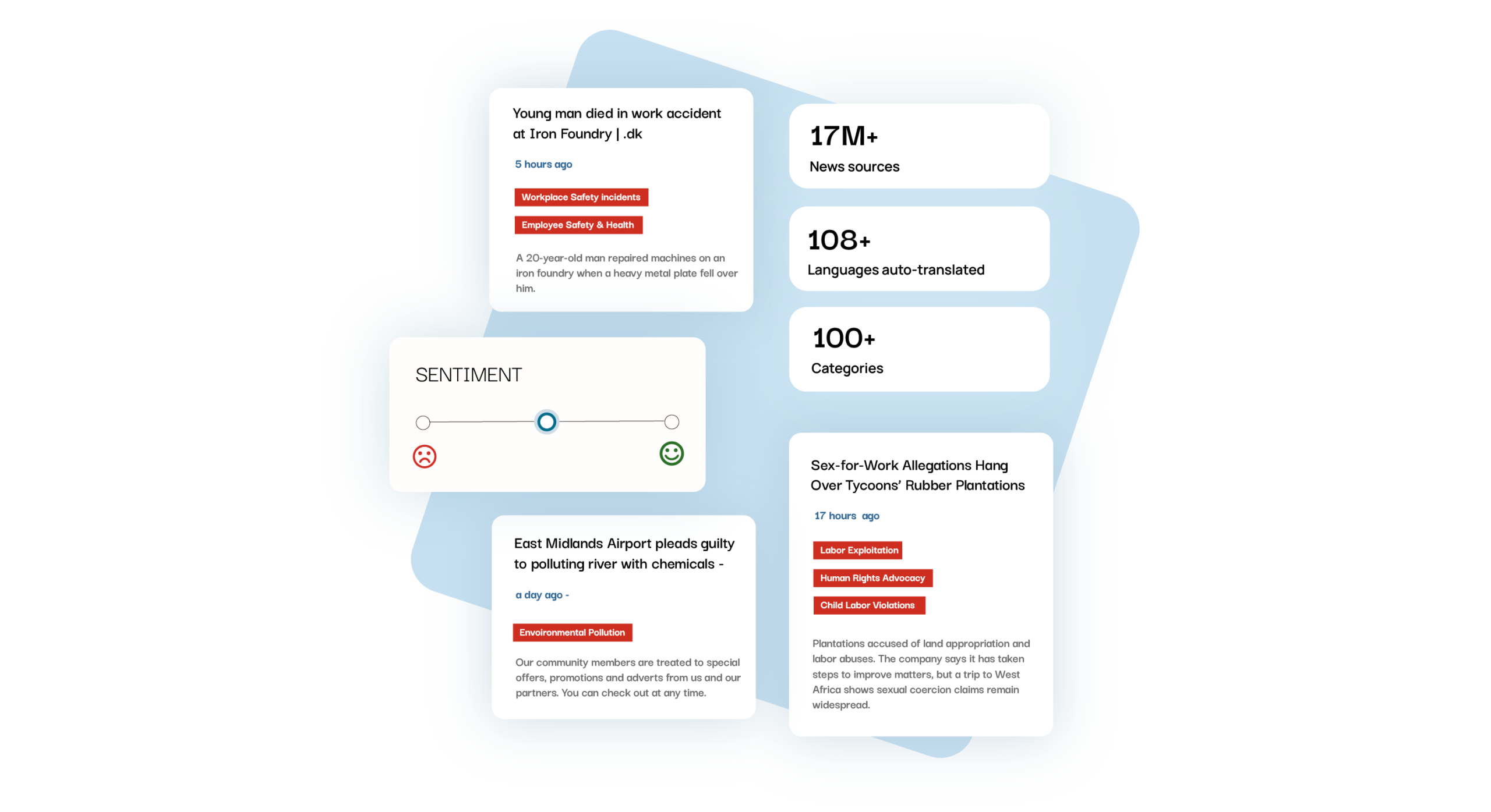
We scan 17M+ sources across 190+ countries in 108+ languages — including local enforcement agencies, environmental NGOs, regional press, and regulatory databases — to identify early warning signals before they become material compliance failures.
Environmental Risk Categories Monitored
- Illegal deforestation and land use violations
- Hazardous waste dumping and illegal disposal
- Wildlife trafficking and CITES violations
- Illegal fishing and marine resource exploitation
- Air, water, and soil pollution offences
- Illegal extraction of minerals and natural resources
- Environmental regulatory fines and enforcement actions
- Criminal convictions linked to environmental crime
What the Regulation Requires
AMLD6 introduced a harmonised list of 22 predicate offences for money laundering across the EU, with environmental crime included for the first time as a standalone category. The directive requires obliged entities — including banks, payment institutions, financial intermediaries, and designated non-financial businesses — to identify and manage the risk that counterparties generate proceeds from these offences.
Where Environmental Crime Fits in Your Risk Framework
Under a risk-based AML approach, obliged entities must assess whether their customers and business relationships generate, control, or benefit from the proceeds of environmental crime. This includes due diligence on high-risk sectors: natural resource extraction, agriculture, waste management, shipping, and manufacturing — all common in supply chains.
Continuous Monitoring, Not One-Off Checks
Environmental risk evolves. A supplier may have a clean record at onboarding and develop exposure later — through a new subcontractor, a change in operations, or a regulatory investigation. AMLD6 compliance therefore requires ongoing monitoring, not just point-in-time screening. Business Radar supports continuous monitoring across your entire counterparty portfolio.
17M+ News Sources
Global and local coverage of environmental incidents, regulatory enforcement, and supply chain violations — in 108+ languages, auto-translated.
AI-Verified Relevance
Up to 90% false positive reduction through AI context validation. Every signal is confirmed to refer to the monitored entity before it reaches your team.
Full Corporate Structure
Environmental crime often operates through complex corporate structures. Business Radar maps subsidiaries, UBOs, and linked entities so you screen the full ownership network — not just the headline company.
Frequently Asked Questions About AMLD6 & Environmental Crime
What environmental crimes are predicate offences under AMLD6?
Who is obliged to comply with AMLD6 in relation to environmental crime?
How does Business Radar help with AMLD6 environmental crime screening?
Can Business Radar screen across complex supply chains?
Does Business Radar cover historical environmental incidents?
Ready to see Business Radar in action?
Our experts will show you how to screen and monitor your supply chain for AMLD6 environmental crime exposure — and how to build a defensible, audit-ready compliance workflow.